

MOTS-C 40mg
$ 114.95
MOTS-C is a mitochondrial-derived research peptide commonly utilized in laboratory studies focusing on cellular metabolism, mitochondrial signaling, and oxidative stress response. Distinct from most peptides derived from nuclear DNA, MOTS-C originates from mitochondrial DNA, making it particularly valuable for research involving mitochondrial influence on cellular biochemical regulation and energy system performance.
Researchers frequently study MOTS-C in controlled environments to evaluate its interaction with metabolic pathways, mitochondrial stress responses, and intracellular adaptation mechanisms. Its relevance extends to pathways associated with AMPK activation, glucose utilization, and biochemical stress regulation, making it a strong candidate for advanced studies in cellular modeling and metabolic efficiency.
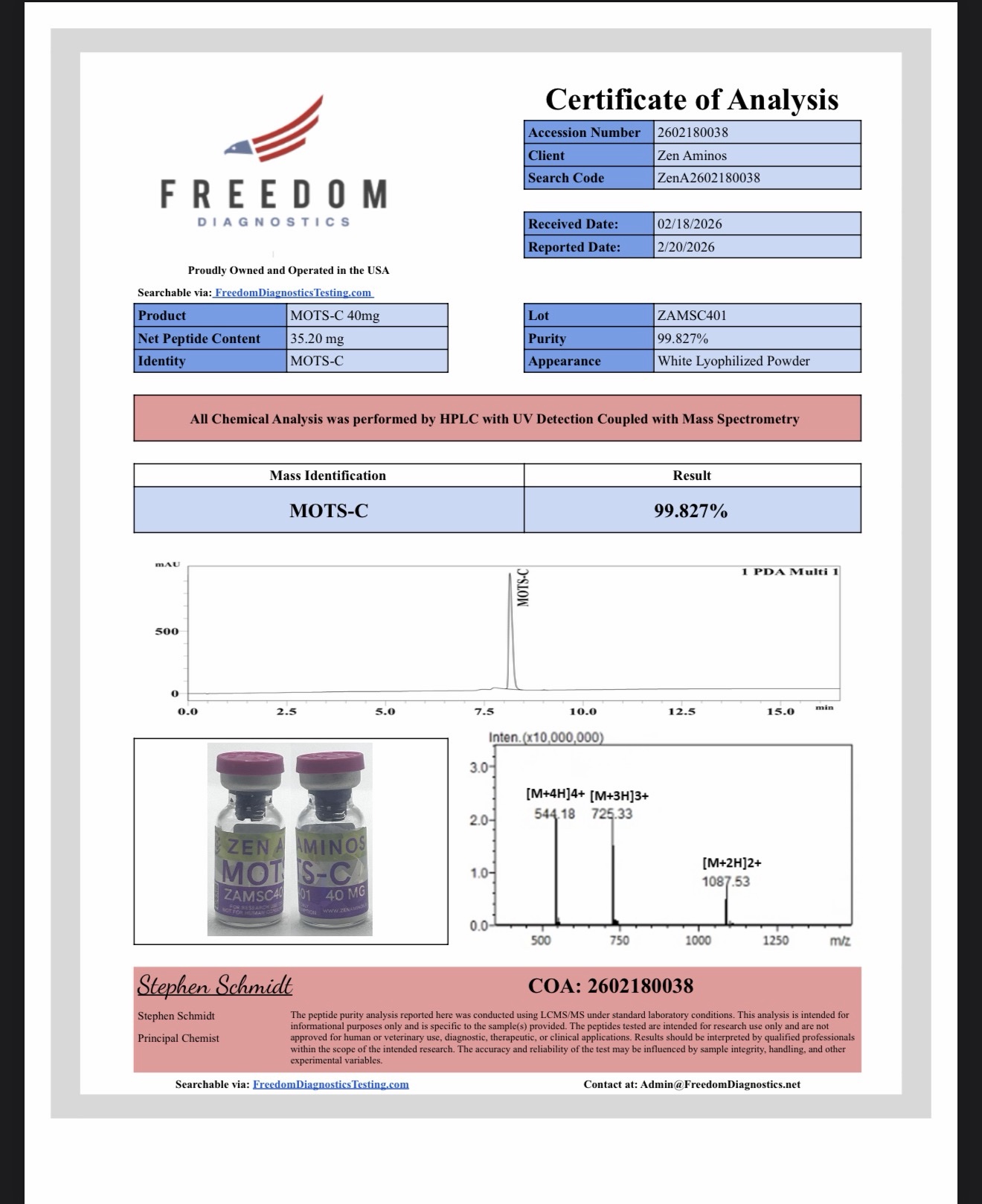
Manufactured to high purity standards via solid-phase peptide synthesis, MOTS-C is batch-tested through HPLC and mass spectrometry to ensure structural accuracy and analytical reliability. A Certificate of Analysis is included with each batch for documentation and scientific traceability.
MOTS-C is provided in lyophilized form for long-term stability and must be stored in dry, temperature-stable conditions. Handling should be performed only by qualified laboratory personnel following standard chemical safety protocols.
Availability: In stock
MOTS-C is a mitochondrial-derived research peptide that has become a key subject in cellular bioenergetics and metabolic pathway studies. Unlike traditional peptides encoded in nuclear DNA, MOTS-C is encoded within mitochondrial DNA, making it a unique biomolecule for laboratories studying mitochondrial signaling, biochemical regulation, and metabolic response mechanisms.
This product is provided as a research-grade peptide in lyophilized form to maintain integrity and long-term stability. MOTS-C is strictly intended for laboratory and in vitro research and is not approved for human or veterinary consumption, medical treatment, diagnostic application, or therapeutic use.
Scientific Classification
- Name: MOTS-C
- Category: Mitochondrial-derived regulatory peptide
- Format: Lyophilized powder for controlled laboratory handling
- Primary Research Scope: Metabolic pathway modeling, mitochondrial response studies, oxidative regulation, and cellular stress analysis
Key Research Areas and Applications
1. Metabolic Regulation Studies
- MOTS-C has been widely explored in laboratory environments for its possible role in:
- Regulation of metabolic signaling pathways
- Influence on cellular glucose utilization
- Modulation of energy system activation
- Interaction with AMPK and related biochemical regulators
- Researchers may analyze its activity in:
- Cellular metabolic modeling
- Molecular adaptation analysis
- Caloric response simulations
- Energy-demand fluctuations under laboratory conditions
2. Mitochondrial Peptide Signaling Research
- Because MOTS-C originates from mitochondrial DNA, it presents unique study value in:
- mtDNA-derived peptide expression
- Intracellular communication between mitochondria and the nucleus
- Mitochondrial influence on systemic biochemical responses
- Such research environments may explore:
- Advanced mitochondrial response mapping
- Molecular crosstalk during stress adaptation
- Mito-nuclear communication behavior
3. Oxidative Stress & Cellular Protection Studies
- In controlled experiments, MOTS-C may be integrated into studies evaluating:
- Cellular tolerance against oxidative load
- Reactive species balancing
- Peptide-driven biochemical defense responses
- Molecular behavior under simulated stress conditions
- Laboratories may examine:
- Peptide-induced intracellular stability
- Effects on mitochondrial protein balance
- Stress-triggered signaling patterns
4. Cellular Performance and Adaptation
- Researchers may apply MOTS-C in assays analyzing cellular efficiency under controlled stimulus, including:
- ATP generation patterns
- Metabolic strain adaptation
- Fuel utilization under biochemical pressure
- This makes the peptide valuable for:
- Bench-top biochemical assays
- Data-driven metabolic pathway evaluations
- Comparative performance modeling between different peptide families
5. Manufacturing and Quality Control
- High Purity Production
- Synthesized using high-precision solid-phase peptide synthesis (SPPS)
- Undergoes batch testing via:
- HPLC
- Mass spectrometry
- Ensures:
- Verified structural identity
- Controlled purity
- Consistent laboratory performance
- Documentation
- Each batch includes a Certificate of Analysis (CoA) for scientific traceability and compliance documentation.
6. Storage & Handling
- Packaging
- Delivered in sterile, lyophilized vials to maintain molecular stability and protect against environmental degradation.
- Recommended Storage
- Keep stored in:
- Cool, dry environments
- Dark and moisture-controlled conditions
7. Avoid
- Light exposure
- Temperature fluctuations
- Humidity infiltration
- Handling Requirements
- Only qualified laboratory professionals should handle this product.
- Reconstitution should be performed only using appropriate research solvents according to experimental protocols.
- PPE such as gloves, protective lab clothing, and safety eyewear must be used during handling.
Advantages for Scientific Research
- Unique mitochondrial origin provides study opportunities not achievable with nuclear-encoded peptides
- Ideal for research institutions exploring:
- Cellular metabolism
- Mitochondrial signaling
- Stress-response pathways
- Metabolic system performance
- Supports consistent and reproducible data generation for lab-based studies
- ⚠️ Important Notice
- MOTS-C is intended strictly for laboratory research use. It is NOT approved for human consumption, medical treatment, therapeutic use, clinical integration, or veterinary application.