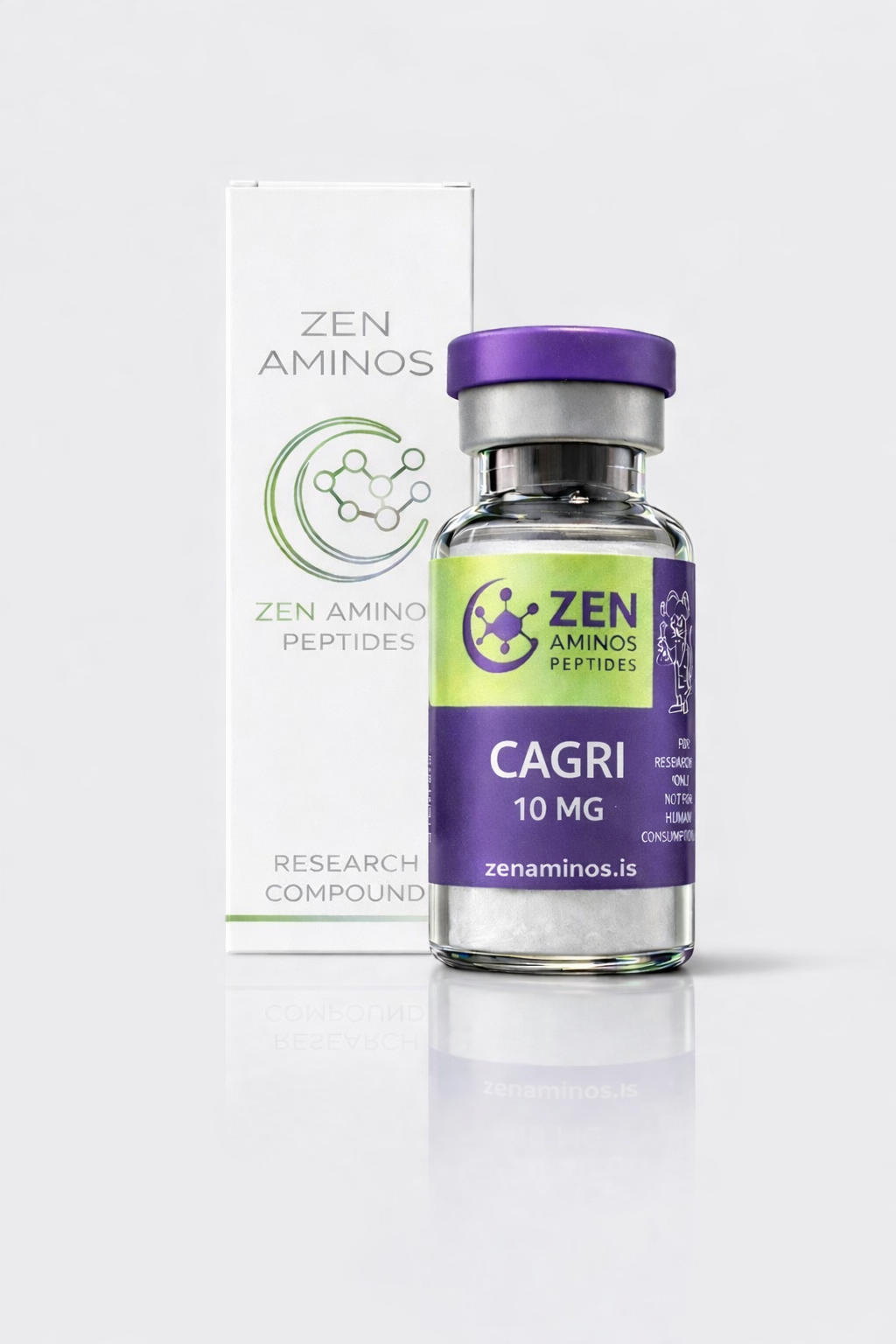
CAGRI 10mg
$ 86.95
CAGRI is a high-purity research peptide supplied in lyophilized form and intended strictly for controlled laboratory and in vitro studies. It is commonly used in investigative research focusing on receptor-mediated interactions, biochemical signaling pathways, and molecular response modeling. Because of its stability and consistent quality, CAGRI is suitable for studies requiring reproducible testing conditions, including receptor-binding assays, intracellular signaling pathway observation, and peptide-driven biochemical behavior analysis.
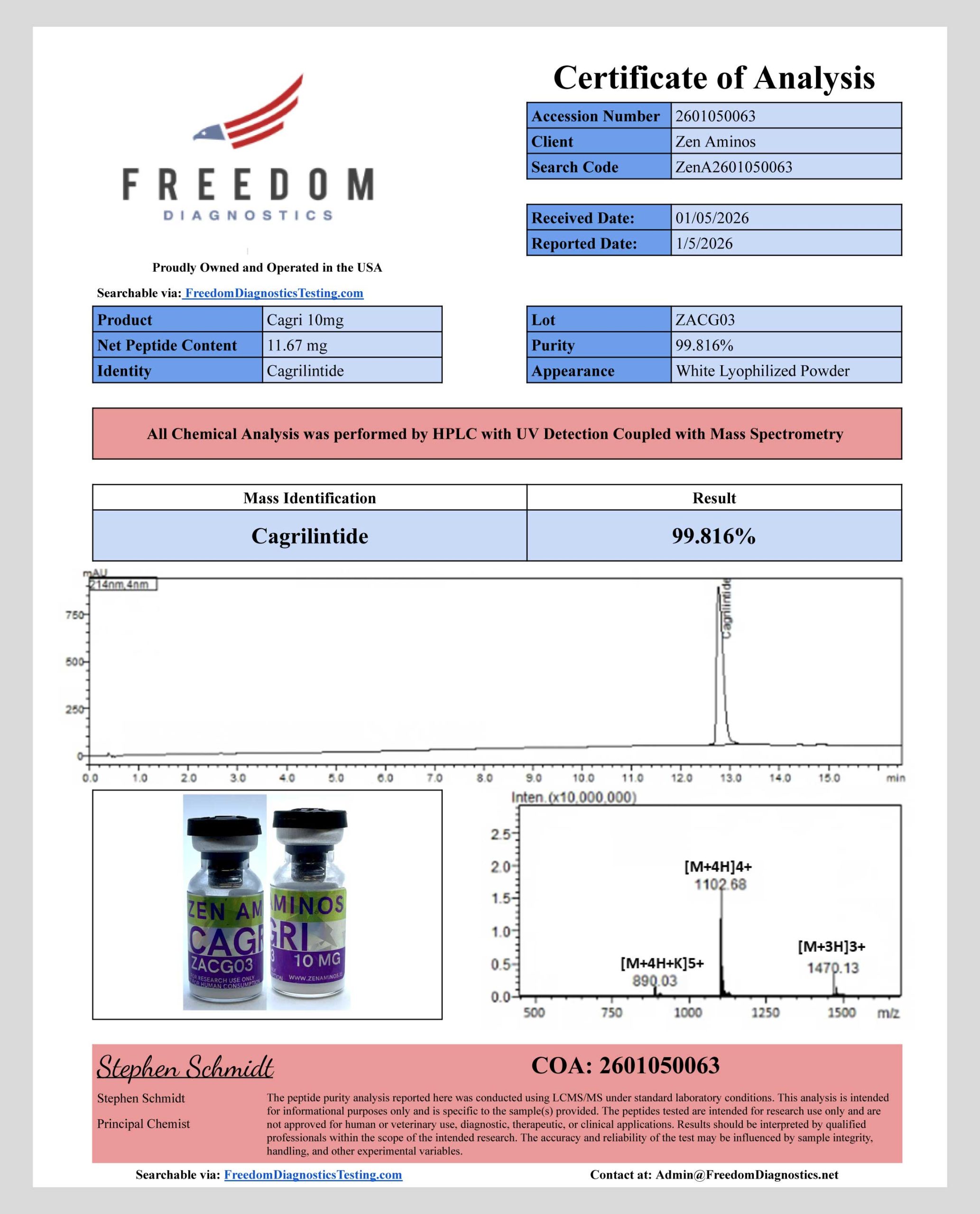
Manufactured through solid-phase peptide synthesis and validated using HPLC and mass spectrometry, CAGRI ensures structural identity and purity suitable for analytical and experimental applications. Each batch is supplied with a Certificate of Analysis to provide scientific traceability, quality verification, and compliance with research material documentation requirements.
Research environments may incorporate CAGRI into studies examining:
- Receptor affinity
- Signaling cascade activation
- Molecular adjustment under controlled conditions
- Comparative peptide performance trials
CAGRI requires proper laboratory storage and handling, including reconstitution with suitable research solvents and the use of appropriate personal protective equipment. It should only be handled by qualified scientific personnel in accordance with established laboratory safety protocols.
Availability: In stock
Product Overview
CAGRI is a research-grade peptide widely utilized in laboratory environments for studies involving molecular signaling, cellular pathway activation, receptor involvement, and controlled biochemical modeling. Supplied in sterile lyophilized form, CAGRI is designed for in vitro and laboratory research only, ensuring stability and consistency throughout experimental use. It is not approved for human or veterinary consumption, clinical use, or therapeutic applications.
Scientific Classification
- Peptide Name: CAGRI
- Grade: High-purity laboratory research specification
- Format: Lyophilized powder
- Primary Use: Biochemical pathway research, receptor signaling modeling, and controlled experimental analyses
- Purity Standard: Verified using HPLC and mass spectrometry
Key Research Applications and Focus Areas
1. Molecular Signaling Pathway Analysis
CAGRI is commonly employed in controlled laboratory research to investigate:
- Peptide-induced activation of biochemical signaling cascades
- Receptor-mediated cellular responses
- Molecular communications between regulatory pathways
- Mechanisms involved in molecular signal transmission
Research involving CAGRI may include:
- Quantitative receptor testing
- Signal strength analysis under controlled conditions
- Molecular amplification or inhibition studies
- Mapping peptide-response interactions
2. Cellular Response and Adaptation Research
In biological studies, CAGRI may be evaluated to observe:
- How cells respond to structured peptide stimulation
- Biochemical adjustments triggered by pathway activation
- Adaptive behaviors within cellular systems
- Dynamic changes in molecular performance over measured time spans
This supports laboratory exploration into:
- Cell resilience modeling
- Controlled stress testing
- Differential component response evaluation
- Gradual or rapid adaptation patterns
3. Binding and Receptor Affinity Testing
CAGRI is often used in receptor-binding assays to examine:
- Affinity to selected receptor systems
- Quantifiable interaction strength
- Competitive receptor behavior when compared to related peptides
- The degree of downstream signaling activation
Such investigations help researchers:
- Understand peptide–receptor dynamics
- Establish repeatable analytical models
- Compare biochemical behavior under adjusted test conditions
4. Biochemical Regulatory Studies
Laboratories may apply CAGRI in research involving biochemical regulation such as:
- Measurement of molecular regulatory interactions
- Monitoring intracellular pathway fluctuations
- Studying controlled metabolic or biochemical system responses
Because of its predictability under controlled systems, it is applicable in:
- Biochemical system mapping
- Intracellular mechanism testing
- Simulation-driven analysis
5. Manufacturing & Analytical Quality Standards
High Purity Synthesis
CAGRI is manufactured using solid-phase peptide synthesis (SPPS) to ensure:
- Structural integrity
- Accurate sequence fidelity
- Reliable molecule performance in controlled data environments
Batch Testing
To verify laboratory consistency, every batch undergoes:
- High-Performance Liquid Chromatography (HPLC)
- Mass spectrometry testing
These confirm:
- Molecular identity
- Purity accuracy
- Controlled production standards
Documentation
A Certificate of Analysis (CoA) accompanies each batch to support:
- Laboratory documentation
- Research transparency
- Traceability across testing cycles
6. Handling & Storage Guidelines
Storage Recommendations
CAGRI should be:
- Stored in a cool, dry laboratory environment
- Protected from excessive heat, ambient moisture, and direct light
- Kept sealed until preparation to maintain stability
Reconstitution
Reconstitution should only be performed:
- With compatible laboratory solvents such as sterile water or research-grade buffer
- By trained laboratory personnel following controlled protocols
Safety Requirements
Standard laboratory PPE must be used at all times:
- Gloves
- Eye protection
- Laboratory coats
Proper chemical handling compliance should be maintained in all research applications.
Advantages for Research Laboratories
CAGRI provides several benefits to scientific and analytical settings:
- High stability for repeatable experimentation
- Documented molecular consistency
- Strong suitability for:
- Biochemical pathway mapping
- Receptor activation modeling
- Predictive cellular analysis
- Competitive or comparative peptide investigation
-
Well-suited for molecular biology, pharmacological research labs, peptide testing programs, and academic research institutions
⚠️ Important Legal Notice
CAGRI is for laboratory research use only.