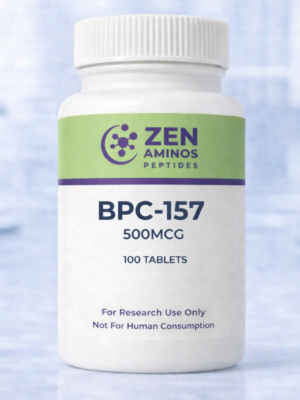
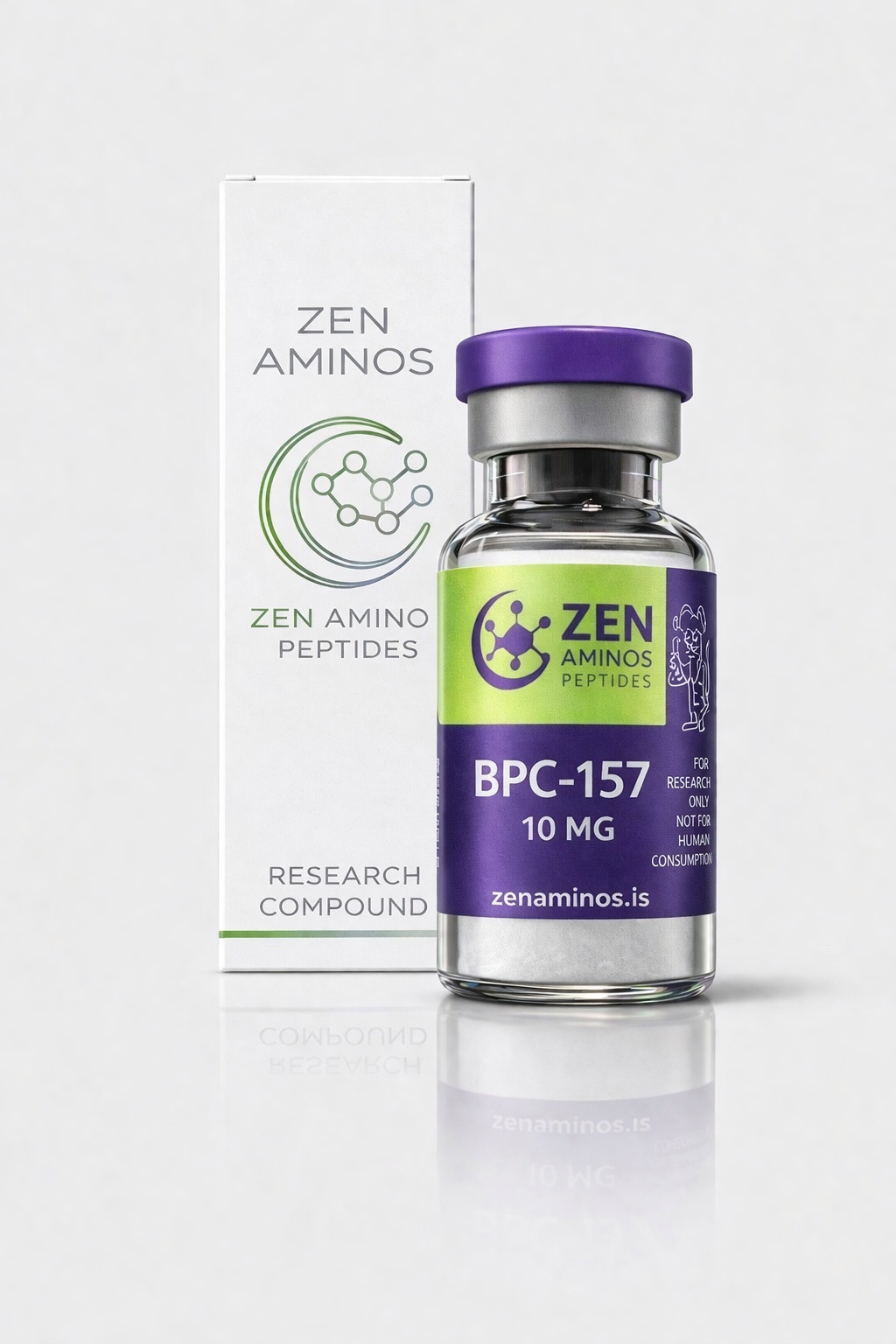
BPC-157 10mg
$ 37.95
BPC-157 is a high-quality, research-grade peptide widely studied for its potential roles in tissue repair, wound healing, and cellular regeneration. This peptide is intended exclusively for laboratory and in vitro research and is not safe for human or veterinary consumption.
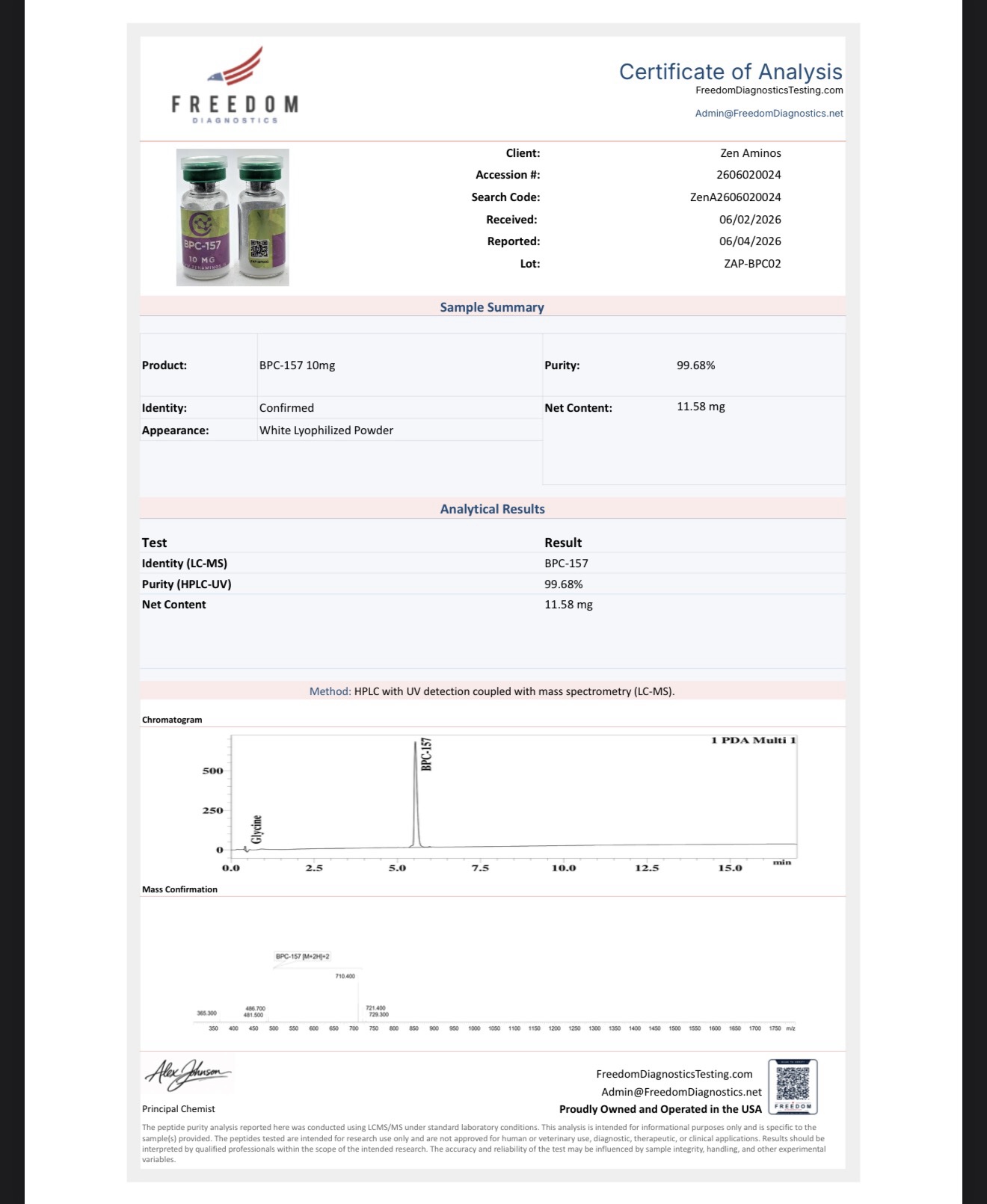
Supplied in a lyophilized (freeze-dried) form, BPC-157 can be reconstituted in sterile water or compatible buffers for experimental applications. Each batch undergoes strict quality control, including HPLC and mass spectrometry, to ensure purity, stability, and reproducibility.
Researchers use BPC-157 to study tendon, ligament, and skeletal muscle repair, wound healing, gastrointestinal tissue protection, angiogenesis, and molecular signaling pathways. It is a versatile tool for regenerative medicine, molecular biology, and preclinical research. Every purchase includes a Certificate of Analysis (CoA) confirming composition, purity, and storage guidelines.
Note: BPC-157 is strictly for research purposes and is not intended for human or veterinary use. Proper laboratory handling, PPE, and safe storage are required at all times.
Availability: In stock
BPC-157 is a synthetic peptide composed of 15 amino acids derived from body protection compound (BPC) naturally found in gastric juice. It is widely studied for its potential roles in tissue repair, wound healing, and cellular regeneration. BPC-157 is a high-purity, research-grade peptide intended exclusively for laboratory and in vitro research. It is not for human or veterinary use.
Key Features
-
High Purity and Consistency: Manufactured using advanced solid-phase peptide synthesis (SPPS) to ensure maximum quality and reproducibility.
-
Lyophilized Form: Freeze-dried to maintain stability during storage and transport.
-
Batch Verification: Each batch undergoes rigorous quality control, including HPLC and mass spectrometry, to guarantee purity and consistency.
-
Certificate of Analysis (CoA): Provided with every batch to detail purity, chemical composition, and storage recommendations.
-
Research-Grade Product: Specifically formulated for preclinical, molecular, and laboratory studies.
Scientific Applications
-
Tissue Repair and Regeneration: Studied for its potential in promoting tendon, ligament, and skeletal muscle repair.
-
Wound Healing Research: Explored in laboratory studies for accelerating tissue recovery and cellular repair mechanisms.
-
Gastrointestinal Research: Investigated for protective effects on the gastrointestinal tract and gut lining.
-
Angiogenesis and Cellular Signaling: Used in experimental studies to explore blood vessel formation and cellular communication pathways.
-
Molecular Biology: Provides a tool to study peptide signaling, protein interactions, and gene expression modulation in preclinical research.
Handling and Storage
-
Reconstitution: Can be dissolved in sterile water, buffer solutions, or other compatible solvents according to experimental protocols.
-
Storage Recommendations: Store in a cool, dry place away from light and moisture to maintain stability and bioactivity.
-
Laboratory Safety: Must be handled by trained personnel using proper personal protective equipment (PPE) and standard laboratory safety protocols.
Why Choose BPC-157?
-
Reproducibility: Ensures consistent results across batches for reliable experimental outcomes.
-
Versatility: Supports research in regenerative medicine, molecular biology, gastrointestinal studies, and wound healing.
-
Quality Assurance: Comes with a Certificate of Analysis (CoA) for complete transparency and documentation.
-
Enhanced Research Potential: Offers a robust tool for studying tissue repair, cellular regeneration, and molecular signaling.
Important Note
BPC-157 is strictly for research purposes only. It is not intended for human or veterinary use and should only be handled by trained laboratory personnel following all standard laboratory safety protocols.
Related products
-
Sale
 CapsulesZAP-ORFORGLIP 6mg 90ct Research CapsuleOriginal price was: $ 229.95.$ 179.95Current price is: $ 179.95.Add to cart
 -
-