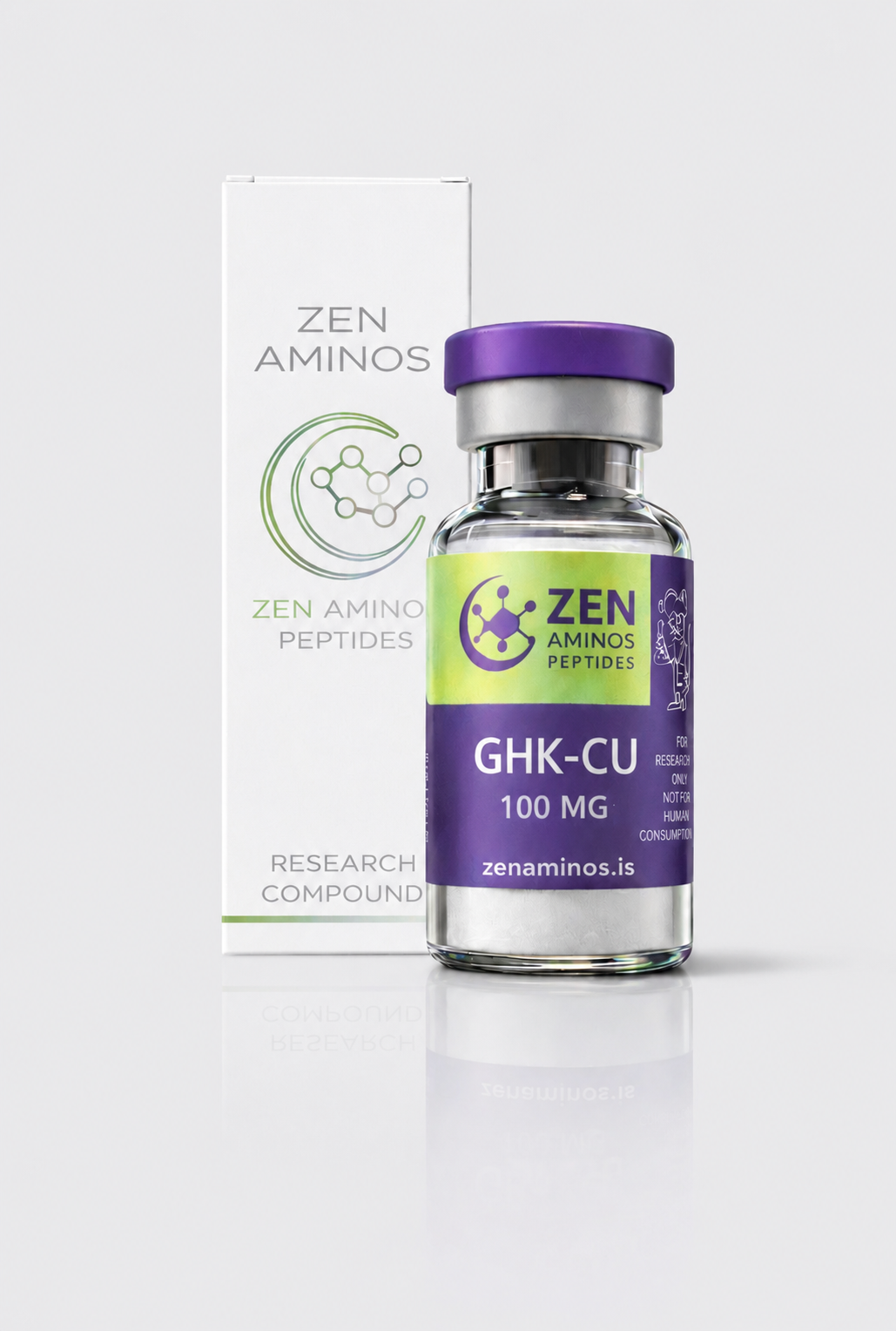
GHK-CU 100mg
$ 72.95
GHK-CU 100 mg is a high-quality, research-grade peptide designed for experimental and in vitro applications. It is a naturally occurring tripeptide complexed with copper, known in research for its potential roles in tissue regeneration, collagen synthesis, and cellular repair mechanisms.
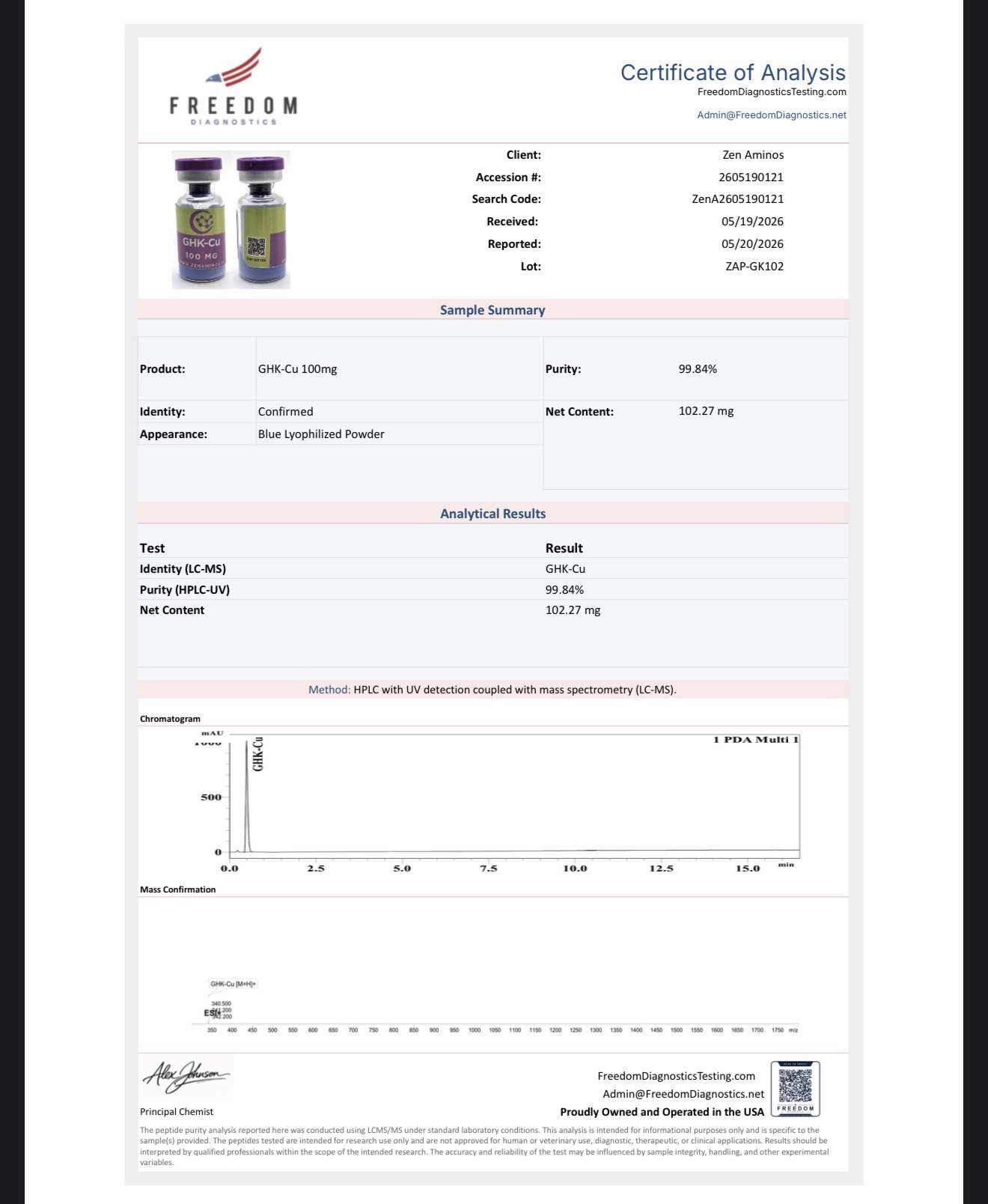
Supplied in a lyophilized form, GHK-CU can be reconstituted in sterile water or compatible buffers for use in laboratory studies. Each batch undergoes stringent quality control, including HPLC and mass spectrometry analysis, ensuring purity, stability, and reproducibility across experiments. This makes it a reliable tool for research in molecular biology, regenerative medicine, dermatology, and tissue engineering.
GHK-CU supports the study of cellular repair processes, gene expression modulation, and extracellular matrix remodeling. Its versatile applications make it a key peptide for advanced scientific research. A Certificate of Analysis (CoA) is included to provide full transparency regarding the quality and composition of each batch.
Note: GHK-CU 100mg is strictly for laboratory research and is not intended for human or animal consumption. Proper laboratory handling, protective equipment, and secure storage are required at all times.
Availability: In stock
GHK-CU is a naturally occurring tripeptide that has gained attention in the scientific community for its potential in tissue regeneration, wound healing, and cellular repair research. Our GHK-CU 50mg product is a high-quality, research-grade peptide designed specifically for laboratory and experimental use. It is strictly for in vitro research purposes and is not intended for human consumption.
The GHK-CU peptide consists of glycine-histidine-lysine bound to a copper ion, forming a complex known for its role in promoting collagen synthesis, modulating inflammatory responses, and supporting cellular communication. Researchers use GHK-CU to explore mechanisms related to tissue repair, skin regeneration, and potential anti-aging pathways in controlled experimental settings.
This peptide is synthesized using advanced solid-phase peptide synthesis (SPPS) techniques to ensure high purity, stability, and reproducibility. Every batch undergoes comprehensive quality control testing, including high-performance liquid chromatography (HPLC) and mass spectrometry (MS), to confirm its composition and integrity. These rigorous standards ensure that GHK-CU delivers consistent performance across all research applications.
GHK-CU 100mg is supplied in a lyophilized (freeze-dried) form to maximize stability during storage and shipping. For laboratory use, it can be reconstituted in sterile water, buffer solutions, or other compatible solvents according to specific experimental protocols. Proper handling, storage, and adherence to safety protocols are essential to preserve its chemical integrity and experimental utility.
The peptide’s versatility makes it a valuable tool for a wide range of scientific studies. It is frequently used in research focusing on regenerative medicine, dermatology, tissue engineering, and molecular biology. Its potential role in modulating gene expression, supporting cellular repair, and influencing extracellular matrix remodeling makes GHK-CU a powerful compound for experimental research.
A Certificate of Analysis (CoA) accompanies each purchase of GHK-CU, providing detailed information on purity, composition, and storage instructions. This ensures that researchers have complete transparency and confidence in the quality of the peptide they are using.
GHK-CU exemplifies the innovation in peptide research, offering scientists a reliable and reproducible tool to explore complex biological processes. It supports advancements in cellular biology, molecular research, and the broader field of biomedical science, enabling researchers to achieve meaningful insights in their studies.
Important Note: GHK-CU is intended solely for research purposes and is not safe for human or animal consumption. It should be handled exclusively by trained laboratory personnel, following all standard safety and storage protocols.